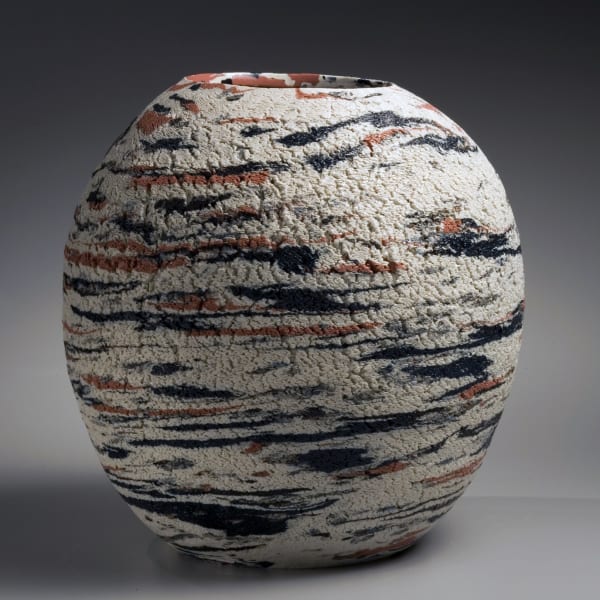
Kamoda Shōji
-
Exhibitions
-

The Winter Show 2025
FORM not FUNCTION: Japanese Ceramic Sculpture 24 Jan - 2 Feb 2025Read more -
PAINTED CLAY
Wada Morihiro and Modern Ceramics of Japan 16 Mar - 14 Apr 2023Read more -
The Artists of HANDS & EARTH
at The Katonah Museum of Art 1 Dec 2020 - 24 Jan 2021Read more -
Summer Clay: Textures of The Shoreline
1 Jul - 29 Aug 2019Read more
-
Vessel Explored / Vessel Transformed - Tomimoto Kenkichi and his Enduring Legacy
13 Mar - 26 Apr 2019Read more -
The Winter Show 2019
The Five Elements - Gogyō: Five Japanese Masters of the Art of Clay 18 - 27 Jan 2019Read more -
Three Giants of the North: Kamoda Shōji, Matsui Kosei, Wada Morihiro
Asia Week New York 2018 12 Mar - 20 Apr 2018Read more -
Timeless Elegance in Japanese Art: Celebrating 40 Years!
Asia Week New York 9 Mar - 14 Apr 2017Read more
-
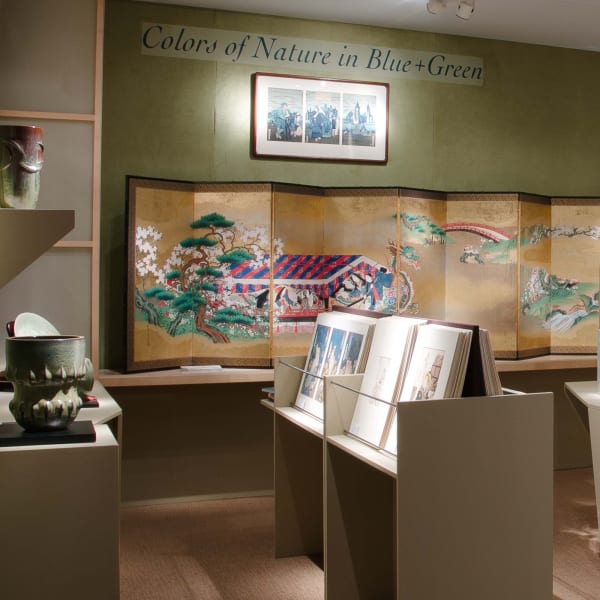
Ao: Colors of Nature in Blue+Green
Winter Antiques Show 20 - 29 Jan 2017Read more -
Winter Antiques Show 2016
A Benefit for East Side House Settlement 22 - 31 Jan 2016Read more -
Tsubo
The Art of the Vessel 13 Mar - 20 Apr 2015Read more -
Winter Antiques Show
A Benefit for East Side House Settlement 23 Jan - 1 Feb 2015Read more
-
Japan in Black and White
Ink and Clay 14 Mar - 25 Apr 2014Read more -
Winter Antiques Show
A Benefit for East Side House Settlement 24 Jan - 2 Feb 2014Read more -
Seven Sages of Ceramics
Modern Japanese Masters 14 Mar - 26 Apr 2013Read more -
Winter Antiques Show
Confronting Tradition in Clay: Japanese National Living Treasures versus Iconoclasts 21 - 30 Jan 2011Read more
-
-
biography
Long considered by many experts to be the greatest Japanese ceramic artist of the 20th century, Kamoda Shōji was able to accomplish in half of a life-time what other artists struggle to partially attain in double the time. In an unrivalled period of productivity from 1966-78, Kamoda transformed the aesthetic appreciation of modern ceramics. Always nominally functional, his stoneware “vessels” are ever imaginative in form, line, balance, glazing and decorative adornment. Today, after his premature death at age forty-nine, artists continue to copy and reinterpret his numerous inventive forms and designs.
1933 Born in Kishiwada, Osaka
1952 Entered the Crafts Department at the Kyoto Municipal University of Art as a ceramics major; studied under Tomimoto Kenkichi
1955 Graduated from the Kyoto Municipal University of Art;
Worked as an engineer at Hitachi’s commercial kiln, Ōgame Tōen (until 1958)
1958 Began apprenticeship at the Tsukamoto Ceramics Center, Mashiko
1959 Rented a kiln in Mashiko and became independent
1961 Built his own climbing kiln in Mashiko
1967 Declined to submit work to the Japan Traditional Arts & Crafts Exhibition
Became entirely independent in order to commit to his own style
Traveled to Tōhoku (northern Japan) in search of a new kiln site
1968 Became unaffiliated with the Japan Crafts Association
1969 Moved to his new kiln and home near Tōno, Iwate
1973 Traveled to England, France, Italy, Rumania, Bulgaria, Turkey, Denmark on a trip led by Mikami Tsuguo, a leading archaeologist in Asian culture and ceramic art historian
1975 Traveled to Korea with Yasuda Takeshi to look at ceramics
1979 Built a new electric kiln in Higashikurume, Tokyo
Left Tōno to live in Higashikurume
1983 Died in Utsunomiya, TochigiAwards:
1956 Graduation piece won a prize and became part of the Kyoto Municipal University of Art collection
1952 First entry to the Shinshōkai Exhibition (thereafter in 1956, 1960, 1962); won the Excellence Award
1957 Won entry to the Contemporary Japanese Ceramics Exhibition
1960 Effort Prize, Shinshōkai Exhibition
1961 First entry to the Japan Traditional Arts and Crafts Exhibition (thereafter annually until 1967)
1962 Nominated as an official member of the Shinshōkai
1964 Nominated as a member for the Japan Crafts Association
Won the Japan Ceramics Society Award
1966 Won the Gold Prize at Japan Ceramic Association
1967 Won the Takamura Kōtarō Prize (first and last winner in ceramics)
1974 Won the Newcomer Award presented by the Minister of Education (first ceramist winner)
Public Collections:
National Museum of Modern Art, Kyoto
Hiroshima Prefectural Museum of art
Iwate Museum of Art
Mashiko Tōgei Messe
Ogawa Museum, Tokyo
Shigaraki Ceramic Art Center
Tochigi Prefectural Museum of Art
Art Complex Museum, Duxbury, Massachusetts
The Victoria and Albert Museum, England
Tsurui Museum of Art, Nigata -
-
-
video
-
-
-
biography_pdf