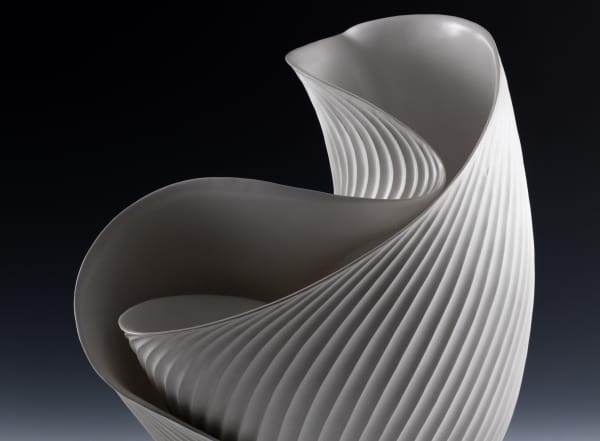
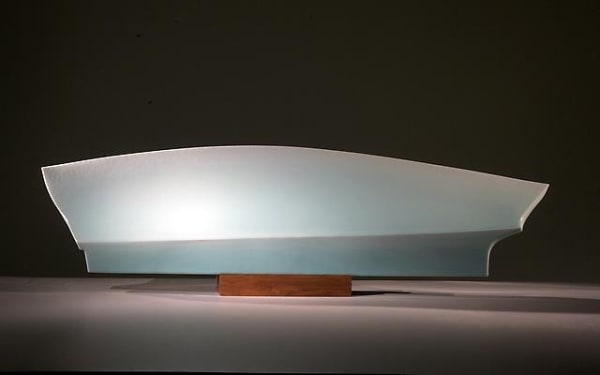
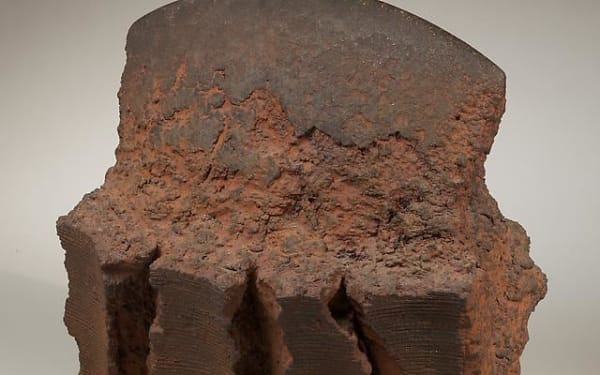
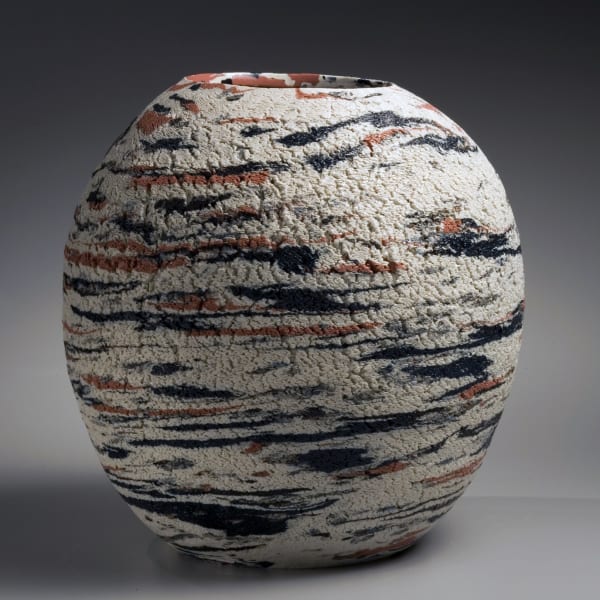
Wada Morihiro
-
Exhibitions
-

BEYOND THE SURFACE: The Unity of Form and Pattern in the Work of Wada Morihiro
Asia Week New York 13 - 21 Mar 2025Read more -
The Winter Show 2025
FORM not FUNCTION: Japanese Ceramic Sculpture 24 Jan - 2 Feb 2025Read more -
PAINTED CLAY
Wada Morihiro and Modern Ceramics of Japan 16 Mar - 14 Apr 2023Read more -
KAZARI: Beyond Decoration
The Winter Show 2022 in spring 1 - 10 Apr 2022Read more
-
Transcendent Kyoto
Winter 2022 4 Jan - 18 Feb 2022Read more -
Chanoyu
Teaware of Japan 15 Jul - 31 Aug 2020Read more -
Summer Clay: Textures of The Shoreline
1 Jul - 29 Aug 2019Read more -
Vessel Explored / Vessel Transformed - Tomimoto Kenkichi and his Enduring Legacy
13 Mar - 26 Apr 2019Read more
-
The Winter Show 2019
The Five Elements - Gogyō: Five Japanese Masters of the Art of Clay 18 - 27 Jan 2019Read more -
Reflections of a Summer Scape
Clay, Prints and Paintings 20 Jun - 17 Aug 2018Read more -
Three Giants of the North: Kamoda Shōji, Matsui Kosei, Wada Morihiro
Asia Week New York 2018 12 Mar - 20 Apr 2018Read more -
Winter Antiques Show 2016
A Benefit for East Side House Settlement 22 - 31 Jan 2016Read more
-
The Salon Art + Design
Park Avenue Armory, NYC 8 - 12 Nov 2012Read more -
Conversations in Clay
West Meets East: A Collector's Perspective 16 Nov 2011 - 21 Jan 2012Read more -
Winter Antiques Show
Confronting Tradition in Clay: Japanese National Living Treasures versus Iconoclasts 21 - 30 Jan 2011Read more -
SOFA:WEST (Santa Fe)
8 - 11 Jul 2010Read more
-
-
biography
As a student, Wada was heavily influenced by his teacher Tomimoto Kenkichi (1886-1963). Wada’s techniques include a variety of decorative styles, such as black and white inlays, wax-resist, carving, under glaze, blue-and–white (sometsuke), and blown-on glaze. Moving from Kansai to Ibaraki Prefecture and into the ceramic town of Kasama enabled him to break free of more traditional aesthetics and develop his own repertoire of motifs and techniques more closely aligned to the work of Kamoda Shōji (1933-1983). For many decades he has been the most widely sought-after Japanese artist working with polychrome decorated surfaces. His sudden and early death in 2008 has left an enormous hole in the world of contemporary Japanese ceramics.
1944 Born in Nishinomiya, Hyogo Prefecture
1967 Graduated from Kyoto City Fine Art College (current Kyoto City University of Arts and Music), studied under Tomomoto Kenkichi, Kondo Yūzō, Fujimoto Nōdō, Shimizu Rokubei while in the college, met Hamada Shōji and Kamoda Shōji in Mashiko during the college years
Started to create his works at the kiln site in Aki-city, Kōchi Prefecture
1969 Built a kiln with other ceramicists and held annual exhibitions in Kochi (until 1974)
1976 Built his own kiln in Kasama city, Ibaraki Prefecture
1983 Became an official member of the Japan Traditional Crafts Association
Commissioned Wall piece, Asahi Seimei Building, Tsuchiura
1990 Resigned from Japan Traditional Crafts Society
1997 Commissioned Wall piece, Ibaraki Government Building, Ibaraki
2002 Named a professor at Tōhoku Art and Craft University
TV program, Shumi Yūyū-Tōgei Nyūmon-Wada-ryū de Tsuchi to Asobu (The Hobby of Ceramics - Playing with clay in the style of Wada), NHK
2008 Passed away at age 64
Awards:
1980 Gold prize, the Faenza International Ceramics Exhibition, Faenza, Italy
Prize of Excellence, the North Kanto Ceramics Exhibition
1987 Main prize, Japan Ceramics Exhibition
1988 Japan Ceramic Society Award
Selected Public Collections:
Kure Municipal Museum of Art, Kure City, Hiroshima
Ogawa Museum of Art, Tokyo
Ibaraki Museum of Modern Art
Tokyo National Museum of Modern Art
Tochigi Prefectural Museum of Fine Arts
Faenza International Museum of Ceramics, Italy
Minneapolis Institute of Art
Musée National de Céramique, Sèvres, France
Musée National de la porcelaine Adrien-Dubouché, Limoges, France
Museum of Fine Arts, Boston, MA
Mint Museum of Art, North Carolina
New Orleans Museum of Art
Newark Museum, New Jersey
Philadelphia Museum of Art
Victoria and Albert Museum -
-
-
-
-
video