Yagi Kazuo
-
Exhibitions
-

The Winter Show 2025
FORM not FUNCTION: Japanese Ceramic Sculpture 24 Jan - 2 Feb 2025Read more -
PAINTED CLAY
Wada Morihiro and Modern Ceramics of Japan 16 Mar - 14 Apr 2023Read more -
10 x 10 Past and Present
Japanese Masters of Ceramics 20 - 29 Jan 2023Read more -
Transcendent Kyoto
Winter 2022 4 Jan - 18 Feb 2022Read more
-
Chanoyu
Teaware of Japan 15 Jul - 31 Aug 2020Read more -
Restraint and Flamboyance: Masterworks of Mino
Asia Week 2020 12 - 28 Mar 2020Read more -
Vessel Explored / Vessel Transformed - Tomimoto Kenkichi and his Enduring Legacy
13 Mar - 26 Apr 2019Read more -
Japanese Ceramics 1960 - Present: Function vs. Sculpture
Winter Antiques Show 2018 22 - 31 Jan 2018Read more
-
Sakiyama Takayuki & Salon Art + Design 2017
CHOTO: Listening to the Waves 8 - 13 Nov 2017Read more -
Timeless Elegance in Japanese Art: Celebrating 40 Years!
Asia Week New York 9 Mar - 14 Apr 2017Read more -
A Palette for Genius
Japanese Water Jars for the Tea Ceremony 10 Mar - 15 Apr 2016Read more -
Winter Antiques Show 2016
A Benefit for East Side House Settlement 22 - 31 Jan 2016Read more
-
Tsubo
The Art of the Vessel 13 Mar - 20 Apr 2015Read more -
Winter Antiques Show
A Benefit for East Side House Settlement 23 Jan - 1 Feb 2015Read more -
Japan in Black and White
Ink and Clay 14 Mar - 25 Apr 2014Read more -
Winter Antiques Show
A Benefit for East Side House Settlement 24 Jan - 2 Feb 2014Read more
-
Seven Sages of Ceramics
Modern Japanese Masters 14 Mar - 26 Apr 2013Read more -
Winter Antiques Show
A Benefit for East Side House Settlement 25 Jan - 3 Feb 2013Read more -
The Salon Art + Design
Park Avenue Armory, NYC 8 - 12 Nov 2012Read more -
Conversations in Clay
West Meets East: A Collector's Perspective 16 Nov 2011 - 21 Jan 2012Read more
-
-
biography
Born in Kyoto on July 4, 1918, Yagi Kazuō was the eldest son of ceramist Yagi Issō (1894-73), who excelled at works inspired by Chinese Song Dynasty ceramics. After graduating from the sculpture section of the Kyoto Municipal School of Arts and Crafts, Yagi Kazuō became a student at the Ceramic Research Institute in Kyoto and in 1946 took part in establishing the Young Pottery-makers’ Collective, which was disbanded in mid-1948. Later that year, he co-founded the avant-garde group Sōdeisha as a vehicle for expanding the expressive possibilities of clay.
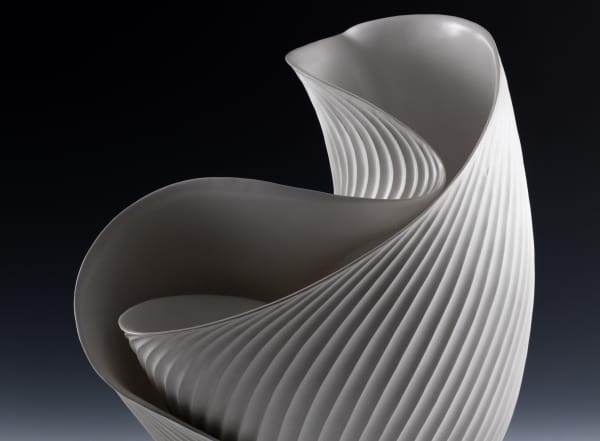
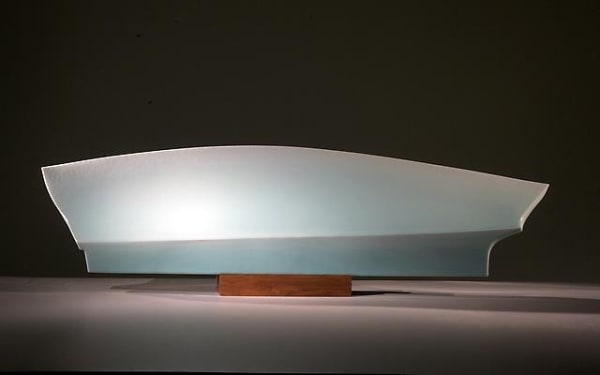
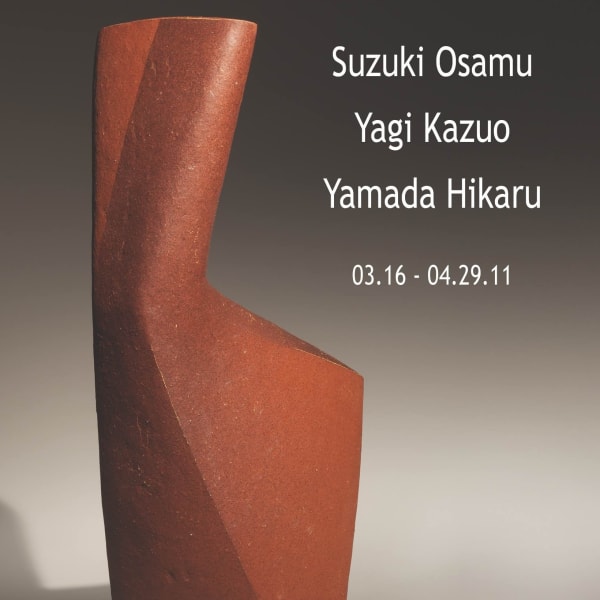
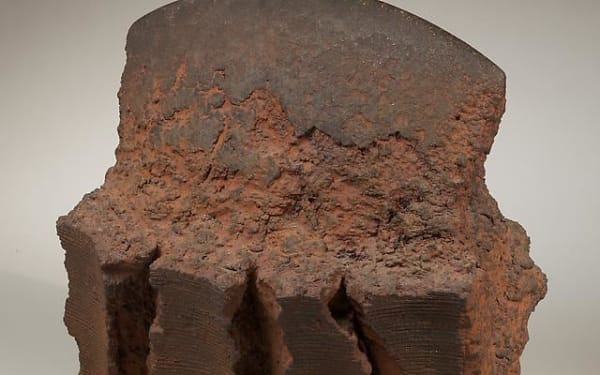
Yagi focused on the creation of “objets” — neither pure sculpture nor simply vessels. In 1954 at the Form Gallery, Tokyo, he exhibited his now iconic work, “Mr. Zamsa’s Walk,” which marked his radical repositioning of the potter’s wheel as a mere mechanical tool instead of the determining factor in the forming process. However, like his Sōdeisha colleagues, Yagi began with utilitarian vessels inspired by modern Western art. In 1962, together with Yamada Hikaru, he established Mon Kōbō (“Corner Workshop”), in which Yamada was responsible for the functional forms and Yagi, for the surface patterning. Yagi was quite comfortable producing sculptural forms and utilitarian vessels simultaneously and respected them equally. Yagi was the first artist to incorporate smoke-blackened ware into the modern ceramic vocabulary, starting in 1957. This manner of treating the surface allowed the original sharpness of the sculpted clay form to remain visible; moreover, it remained unassociated with any prior Japanese ceramic tradition.
With broad interests in poetry, music and photography, and known for his sarcastic wit and intellect, Yagi inevitably became Sōdeisha’s spokesman. Over time, as its central figure, Yagi also assumed the mantle of standard-bearer for contemporary ceramic art in postwar Japan.1918 Born in Kyoto
1937 Graduated in sculpture from Kyoto Municipal College of Art and Craft
1938 Enlisted in army
1940 Discharged from army due to tuberculosis
1943 Became an art teacher at the Chūgū Elementary School in Kobe then at the Second Ritsumeikan Junior High School
1946 Resigned from teaching
Participated in organizing the Young Pottery-makers’ Collective
1948 Co-founded Sōdeisha
1950 Works included in exhibition at and acquired by the Museum of Modern Art, New York
1952 Co-organized Gendai Bijutsu Kondankai (Genbi) (Contemporary Art Discussion Group)
1957 Became an adjunct instructor in sculpture, Kyoto Municipal College of Fine Arts
1965 Works included in the traveling exhibition, New Japanese Painting and Sculpture that toured the US, including the Museum of Modern Art, New York
1971 Appointed professor at Kyoto Municipal College of Fine Arts
Designed the front of the Olympic medals for the Sapporo Winter Olympics
1973 Sent to Pakistan, Afghanistan and Iran as the leader of the Silk Road Research Group of the Kyoto Municipal College of Fine Arts
1976 Built a kiln in Uji, Kyoto
1978 Exhibited FIAC at Grand Palais, Paris
1979 Died at age 61
Awards:
1948 Kyoto Mayor’s Prize at Kyōten exhibition
1959 Grand Prize, Second International Congress of Contemporary Ceramics, Ostend Belgium
1962 Gold Medal, Third International Academy of Ceramic exhibition, Prague, Czechoslovakia
1973 Japan Ceramics Society Award
Selected Public Collections:
Aichi Prefectural Ceramic Museum
Aizawa Art Museum, Niigata
Hiroshima Prefectural Art Museum
Hyogo Prefectural Museum of Art
Ikenobo Society of Floral Art, Tokyo
Kyoto Municipal College of Fine Arts
Kyoto Municipal Museum of Art
Ministry of Foreign Affairs, Japan
Mie Prefectural Art Museum
Minneapolis Institute of Arts, MN
Musée Tomo, Tokyo
Museo Internazionale delle Ceramiche, Faenza
Museum of Modern Art, Kamakura and Hayama
Museum of Modern Art, New York
Museum of Modern Art, Wakayama
Museum of Modern Ceramic Art, Gifu
National Museum of Art, Osaka
National Museum of Modern Art, Kyoto
National Museum of Modern Art, Tokyo
Niigata Prefectural Museum of Modern Art
Rockefeller Foundation
San Francisco Museum of Modern Art
Scripps College
Shigaraki Ceramic Cultural Park, Shiga (Shigaraki Tōgei no Mori)
Suntory Museum of Art, Tokyo
Takamatsu City Art Museum, Kagawa
Tokoname City Board of Education, Aichi
University of Michigan Museum of Art, Ann Arbor
Victoria and Albert Museum, London -
-
-